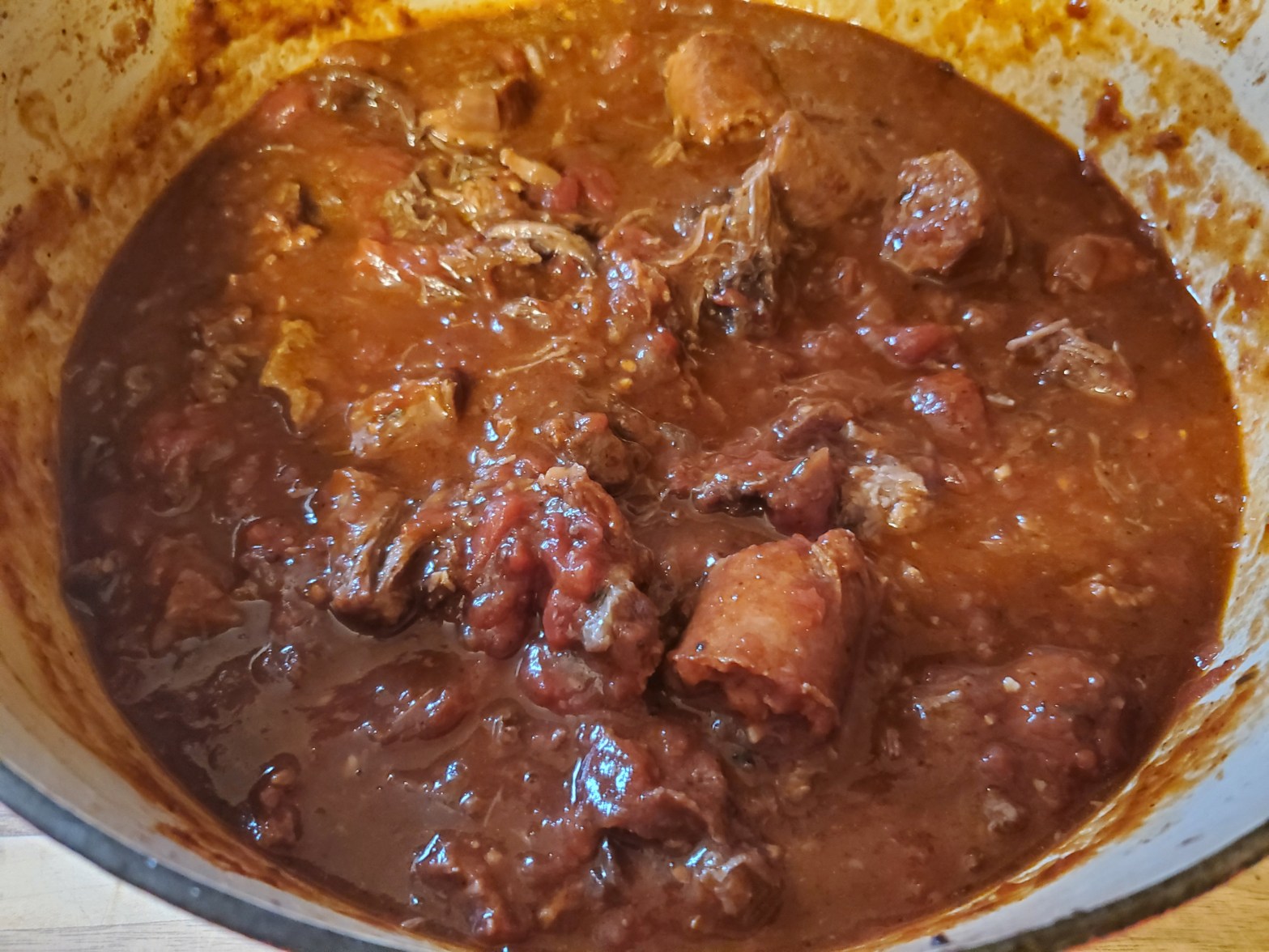
Note: This dish and the process described here can be found in recipe form at the bottom of the post.
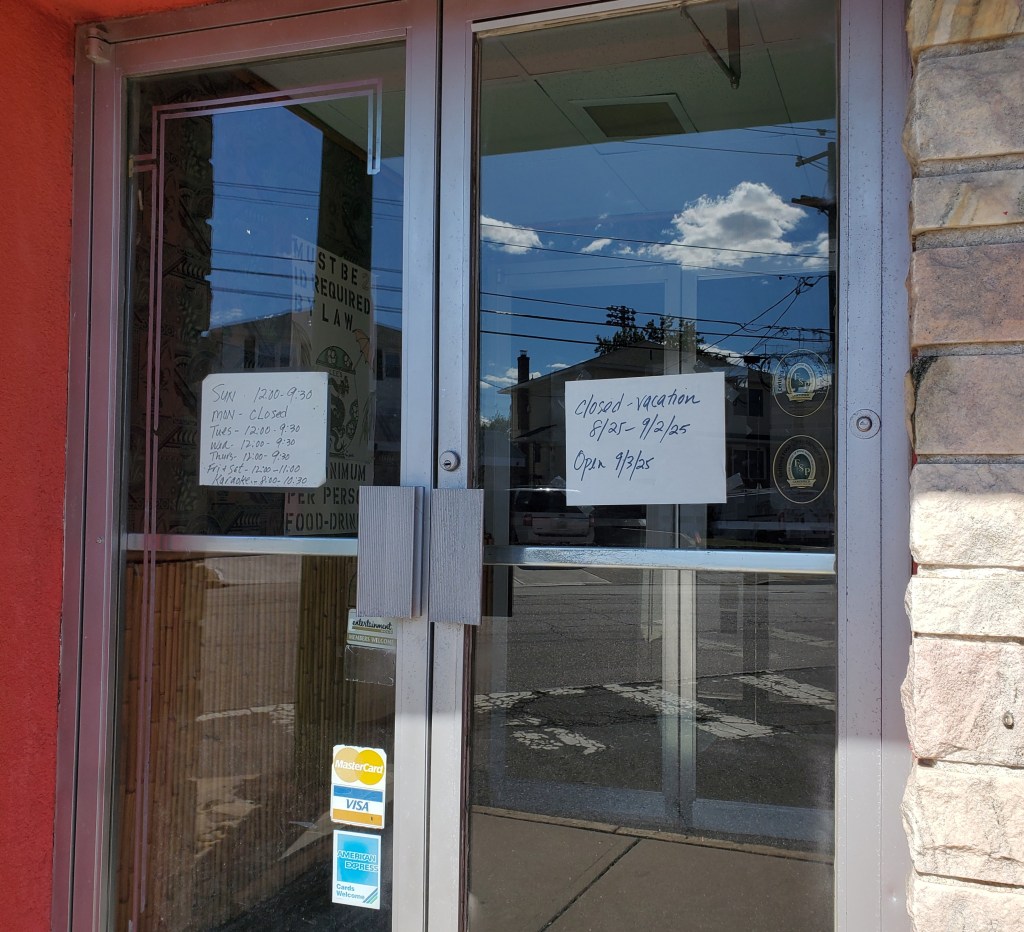
My initial plan for this week’s post was to write about my visit to North Jersey to eat at one of the last remaining tiki-bar-Polynesian-style Chinese restaurants in the eastern United States. Unfortunately, when we arrived there, we found that they were closed for their annual vacation.
From the site of my great disappointment, we moved on to a classic-looking diner down the street that has a sign proclaiming their cheesecake to be world famous. The ribeye that came as part of my steak and eggs made me think of what condemned prisoners must be served for a final meal. The cheesecake was fine, but I doubt anyone is discussing it beyond the diner’s immediate environment.


So it was on to Plan C – that being my first post in quite some time on my own home cooking adventures. As is often the case, that means Sunday gravy – or as I call it in the recipe at the bottom of the post, two-day gravy.
In my first post on the topic back in the fall of 2021, I wrote about the therapeutic effect that the day-long process of making Sunday gravy can have on me. I needed that after the previous evening’s let-down.
I started by visiting my local butcher to pick up a few of the meatiest beef short ribs they had and some hot Italian sausage. We already had everything else I needed on hand
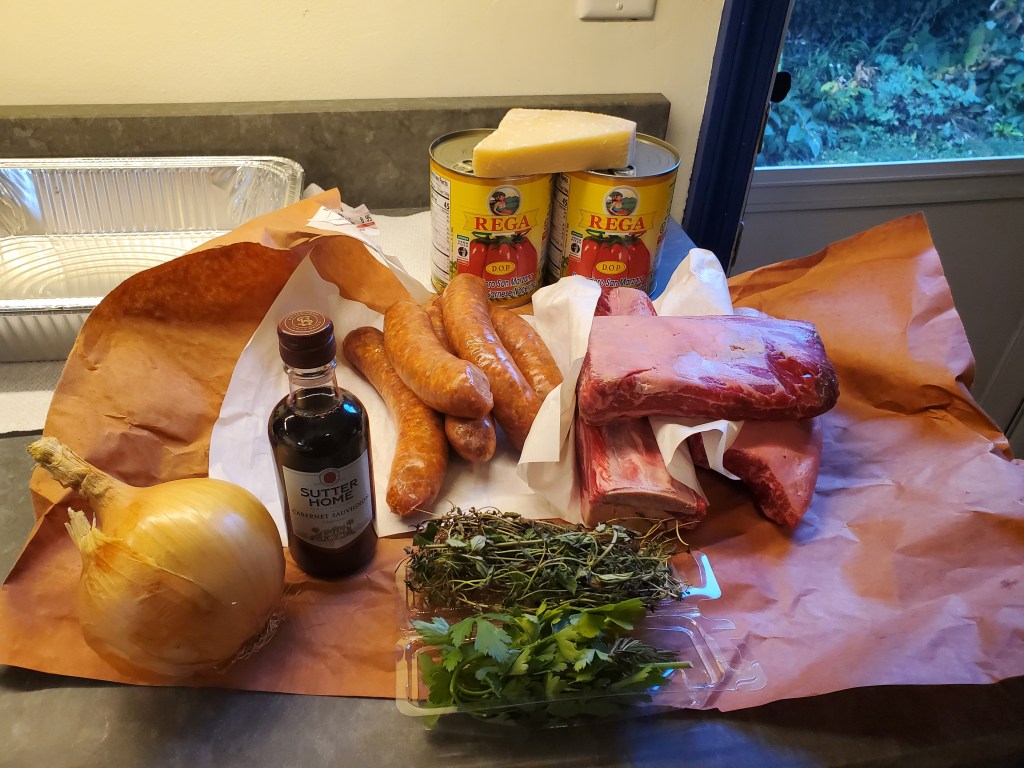
In addition to the gravy ingredients, it’s important when making a recipe with such large pieces of meat and bones on the stove to use a pot that can hold all of your ingredients with the meat submerged in the sauce. I went with our eight-quart Dutch oven.
Aside from pre-chopping the onion and garlic, the first step in the cooking process is seasoning with salt and pepper and searing the short ribs. Start by heating the pot over medium-high heat for several minutes, then pouring three tablespoons of oil into it. I prefer to use a light olive oil. If you can’t fit all of the short ribs into the bottom of the pot, sear them in batches. Make sure to sear all sides of the ribs. This should take about 10-12 minutes.
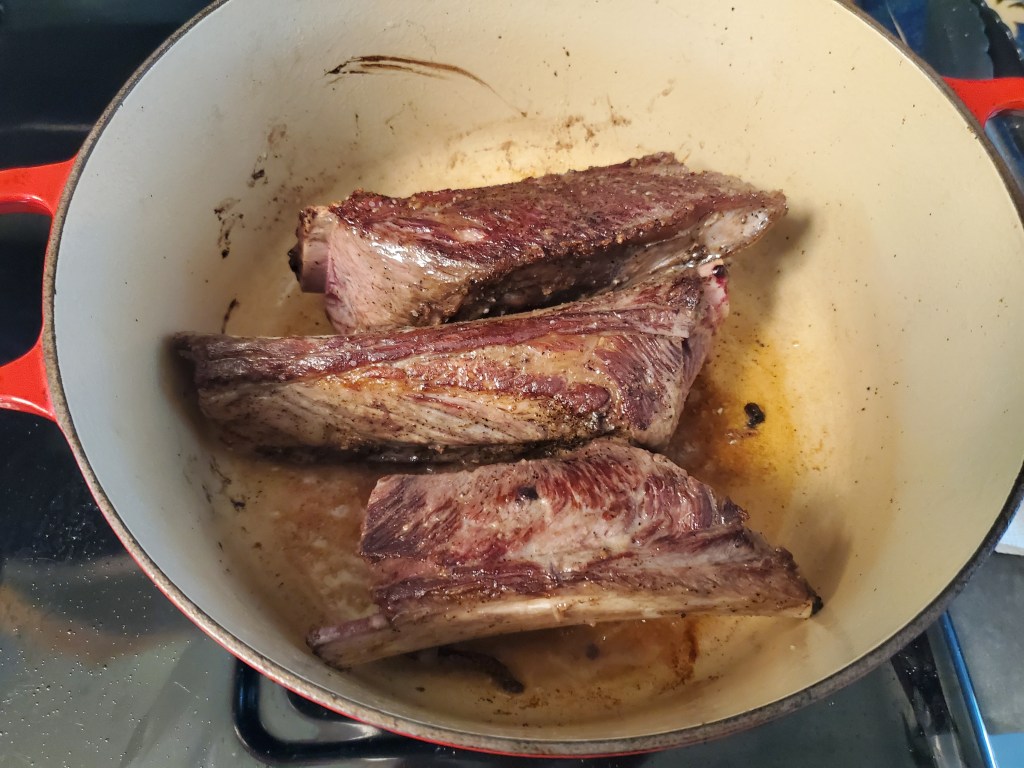
After you’re finished searing the ribs, remove them from the pot and set aside. Leave the oil and rendered fat at the bottom of the pot and the stove flame on.
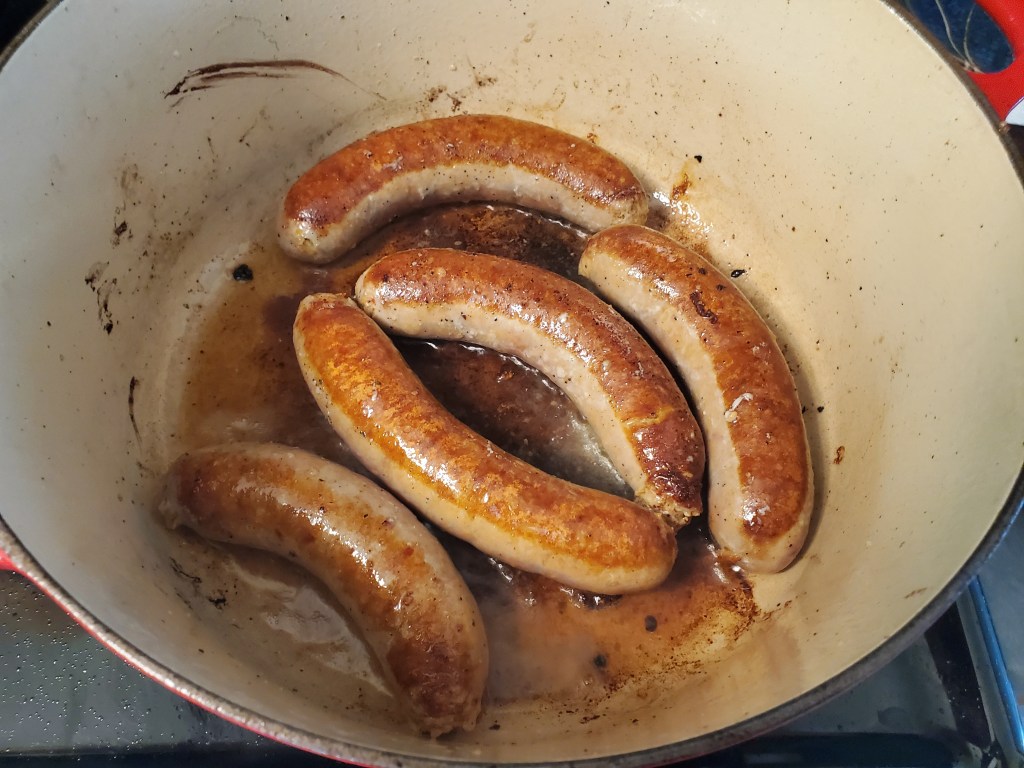
Place the sausage links into the bottom of the pot and brown them, making sure to spin them periodically so that all sides are browned.
When you’re finished browning the sausage links, remove them from the pot and set aside, again leaving the flame on and accumulated oil and rendered fat in the pot.
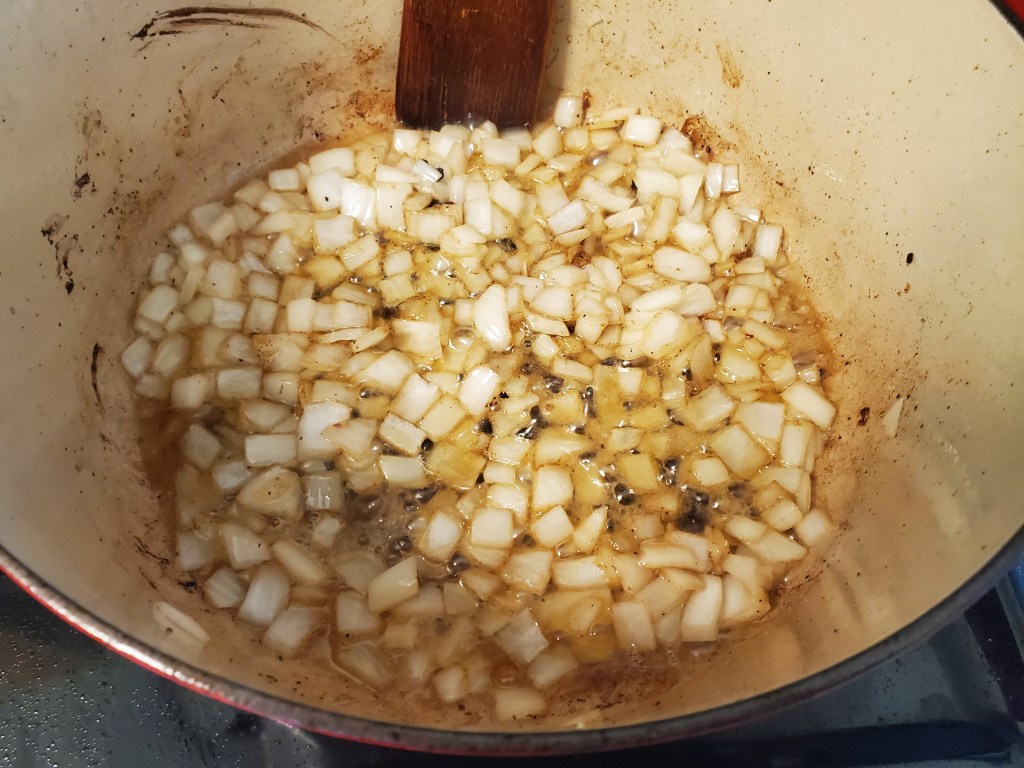
At this point, place the chopped onion into the pot over a medium flame and stir occasionally until they are soft. Add the garlic, stir, and allow to sit for just another half minute so that the garlic won’t burn.
Then add two or three tablespoons of tomato paste and mix it in with the chopped onions and garlic.
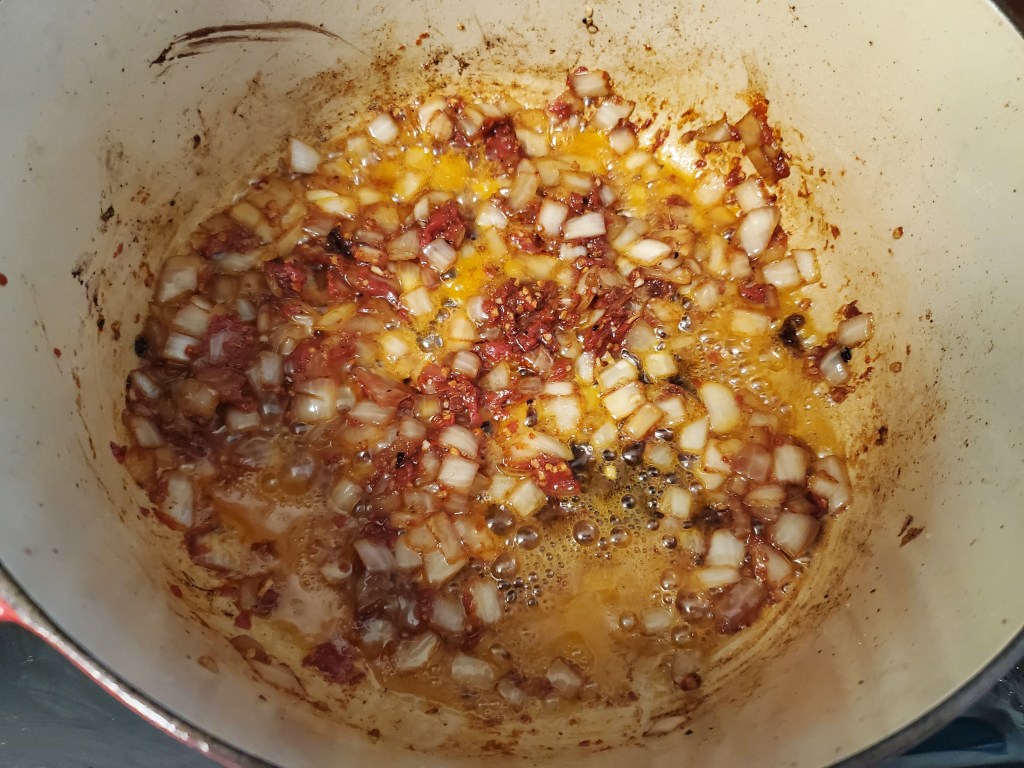
It’s now time to deglaze the pan with red wine. My wife and I are not wine drinkers and don’t tend to keep full-sized bottles of it in the house. But I do stock the four-packs of miniature bottles for cooking purposes and used two of them – Cabernet Sauvignon – for this recipe. That adds up to just over a cup-and-a-half.
With the flame set at medium, add the wine to the pot with the onions, garlic and tomato paste and allow it to come to a rapid boil and remain in that state until the wine reduces by half.
While the wine is boiling, you should be scraping off whatever has stuck to the bottom and sides of the pot during the process of searing the meat with a wooden spatula. Keep doing that until you’ve gotten as much off the pot as possible. This is important for flavor.
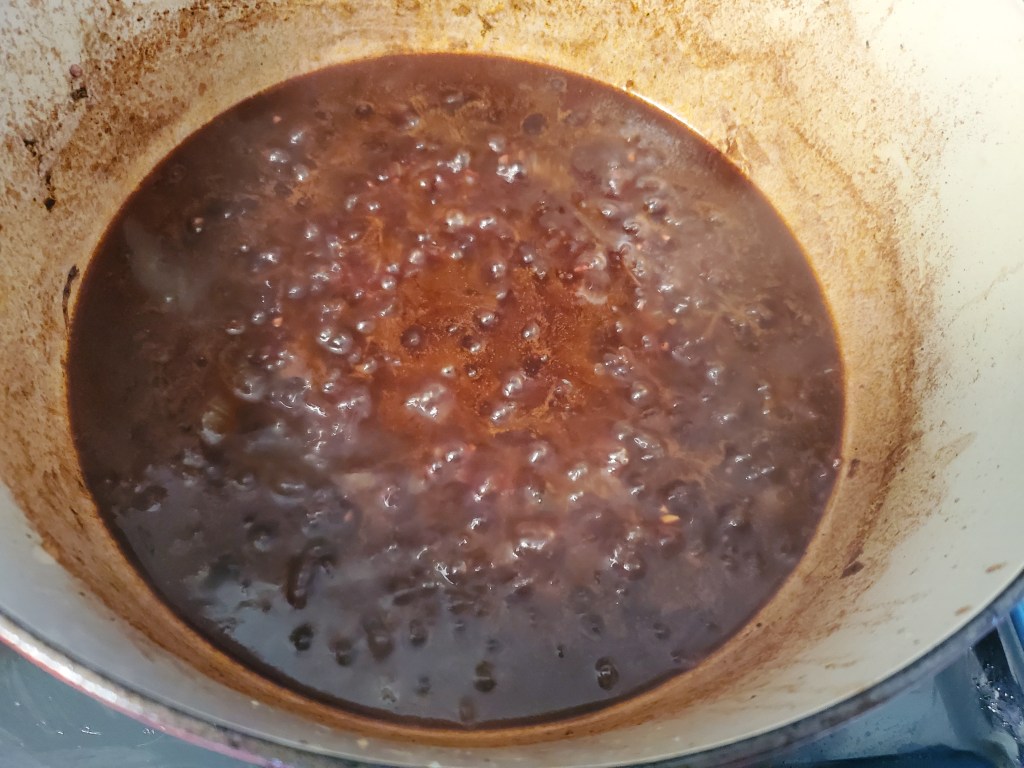
After the wine has reduced by half, it’s time to add the rest of the ingredients to the pot. Start with the two cans of San Marzano tomatoes. I always use tomatoes that are imported from the region of Italy that is famous for growing them. The sign of authenticity when it comes to such tomatoes is the initials, D.O.P., on the can.
Keeping in mind that you want enough sauce in the pot to cover all of the meat, rinse out one or even both of the tomato cans with just enough water to get all of the excess tomato juice off the sides of the can and dump that liquid into the pot.
I chopped at least a few of the tomatoes with my wooden spatula after they were in the pot, but it’s not really necessary. The tomatoes will break down naturally when simmering for hours.
For fresh herbs, I always use Italian parsley and a bay leaf or two. I also added a blend of additional Italian herbs this time around.
As I don’t like to chop herbs, I usually put them into a cheesecloth herb pouch, which are inexpensive and available from Amazon.
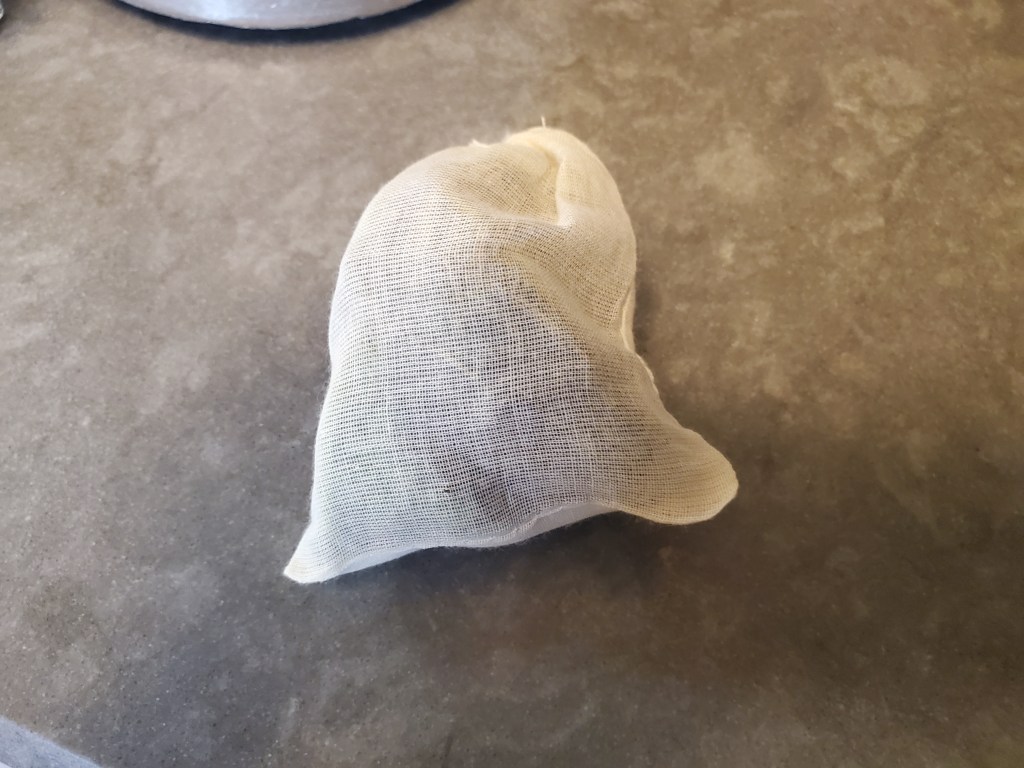
Add the herb pouch, any dry Italian herbs you’re using, sugar, salt, pepper, red pepper flakes and grated Parmigiano-Reggiano cheese into the pot after the tomatoes.
Give everything a good stir and let the sauce come to a boil, before turning down the heat so that it’s at a low simmer.
At that point, put the short ribs and sausage links back into the pot and cover with the lid, leaving about a half-inch crack so that a little steam can escape.
I generally stir the gravy every 20-30 minutes.
Sunday gravy is sometimes called four-hour gravy, and I always let it simmer on the stove for at least four hours – sometimes as long as six.
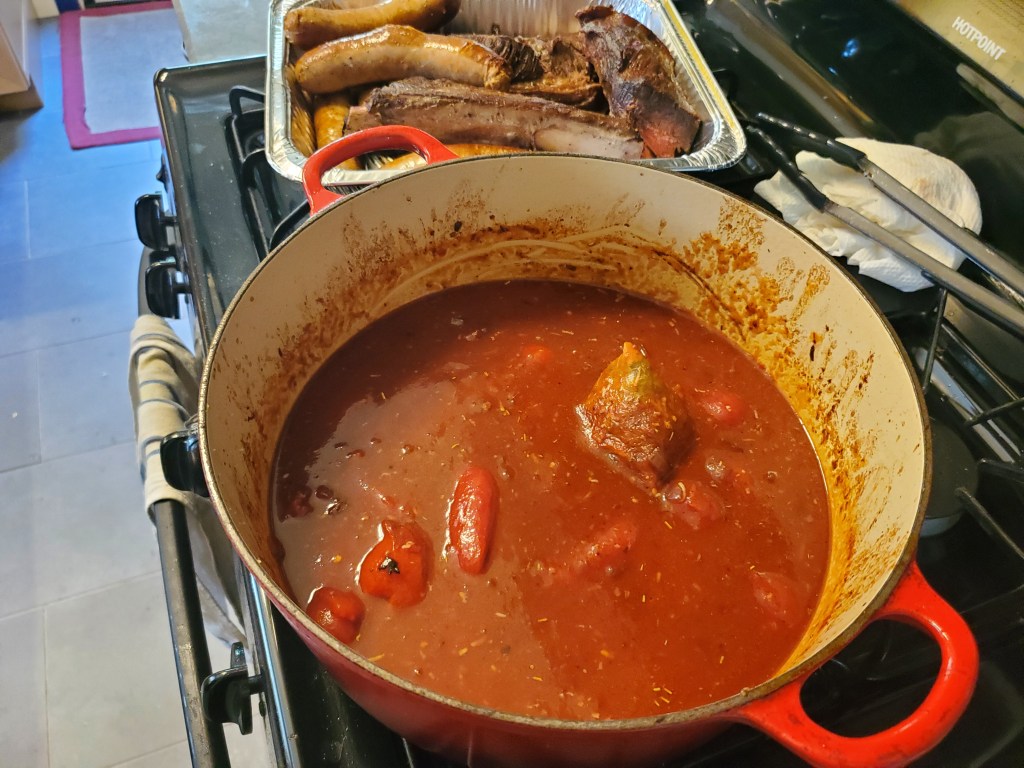
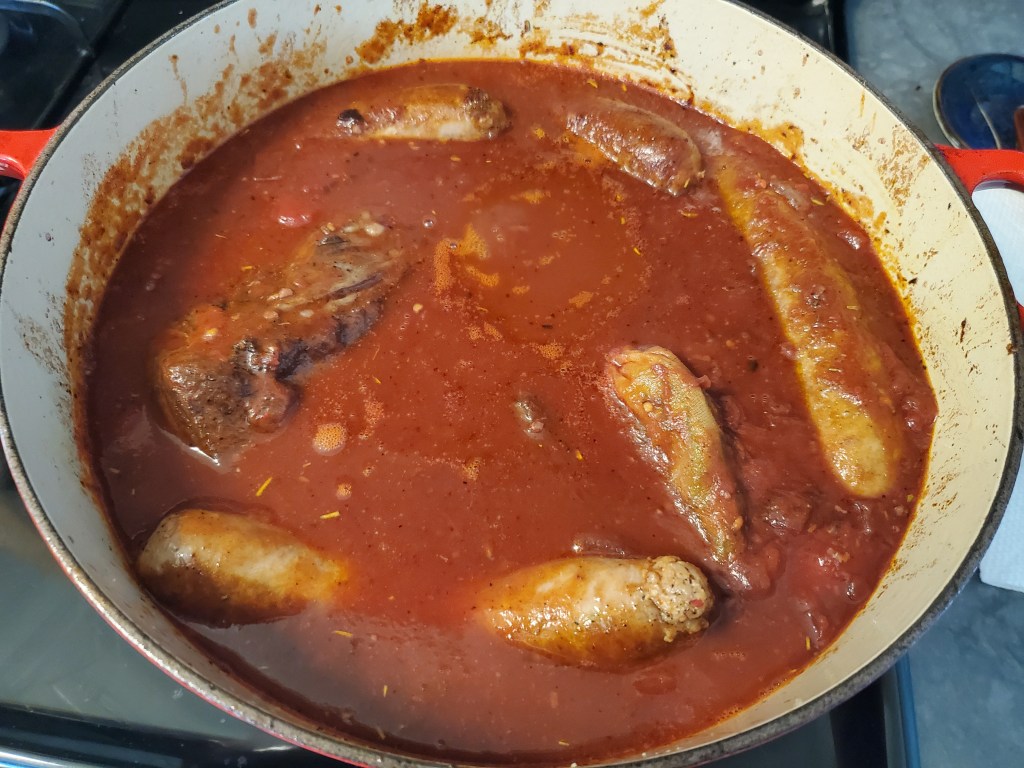
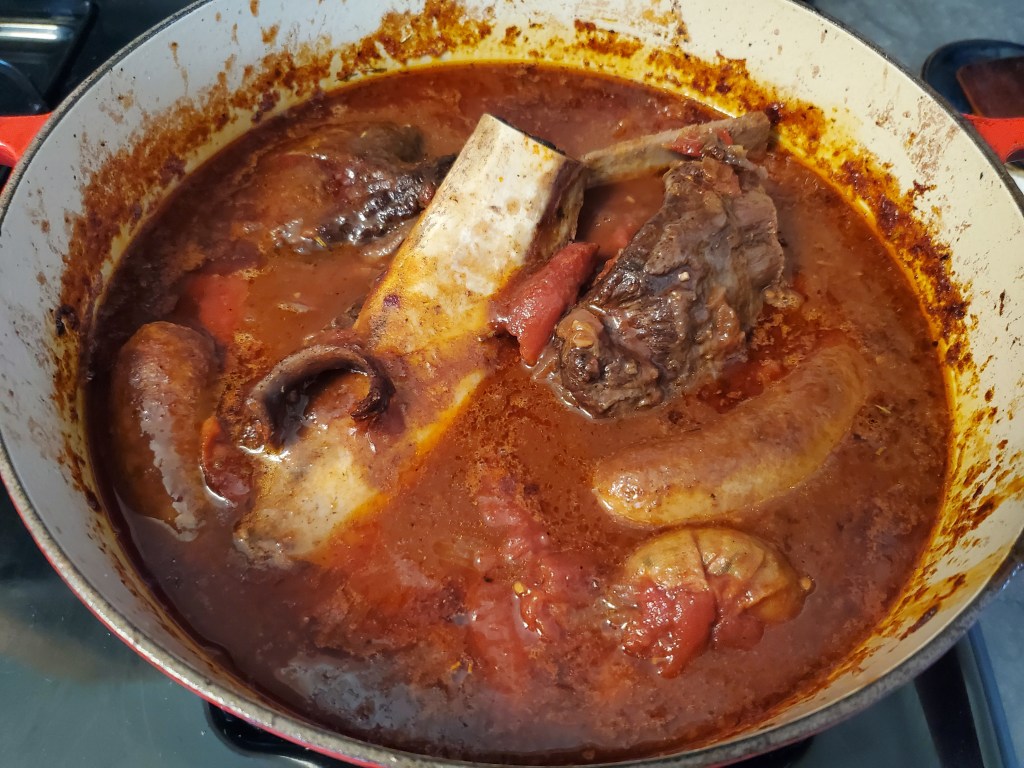
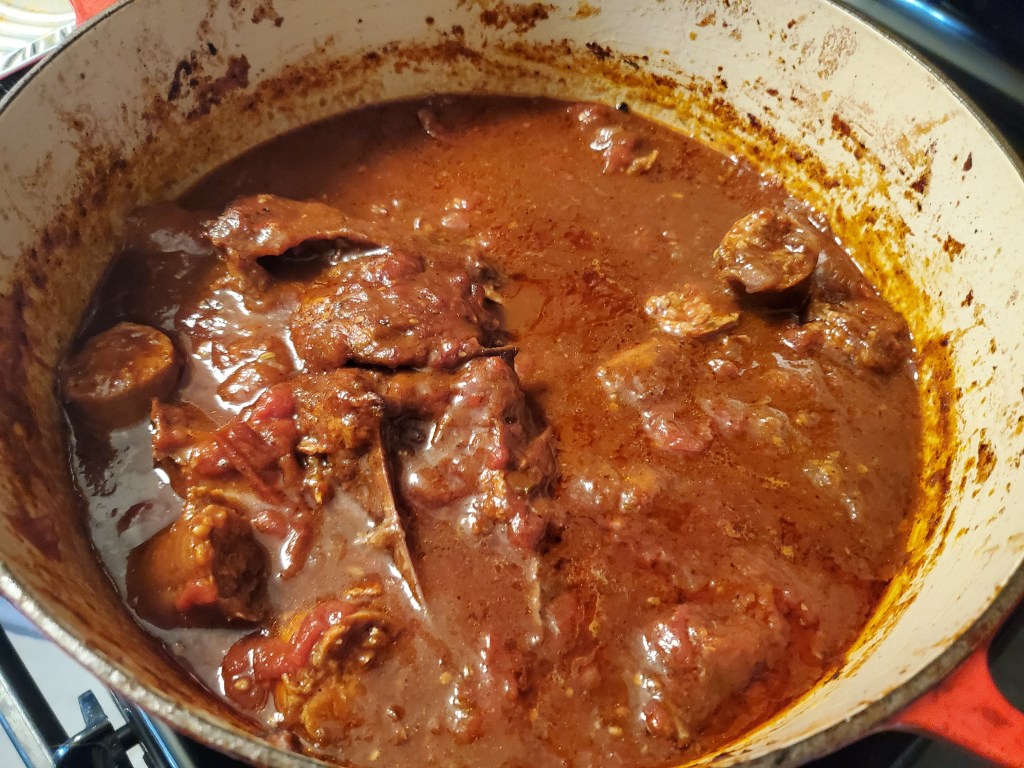
After the gravy has been simmering for three hours, break up the sausage links into smaller pieces of 1”-2” with a wooden spatula. You can also remove and discard any short rib bones that have detached from the meat at that point.
When you’ve finished simmering the gravy, turn off the flame, take out the now boneless short ribs and set them aside to cool to the point where you can handle the meat without burning yourself. Also remove and discard the herb pouch.
When the ribs are cool enough, place them on a cutting board and remove any large pieces of fat or membrane that are still attached to the meat. Then either chop the meat into small bitesize pieces or shred it, according to your texture preference.
Return the pile of chopped or shredded short rib meat to the pot and mix it in thoroughly with the sauce and sausage.
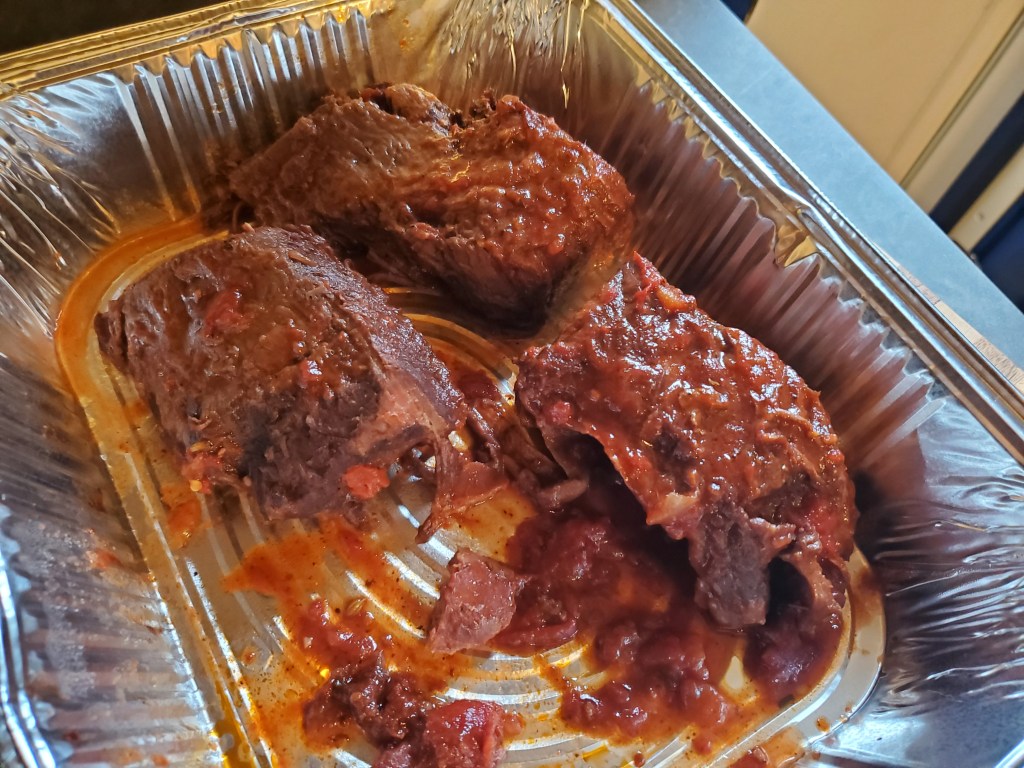
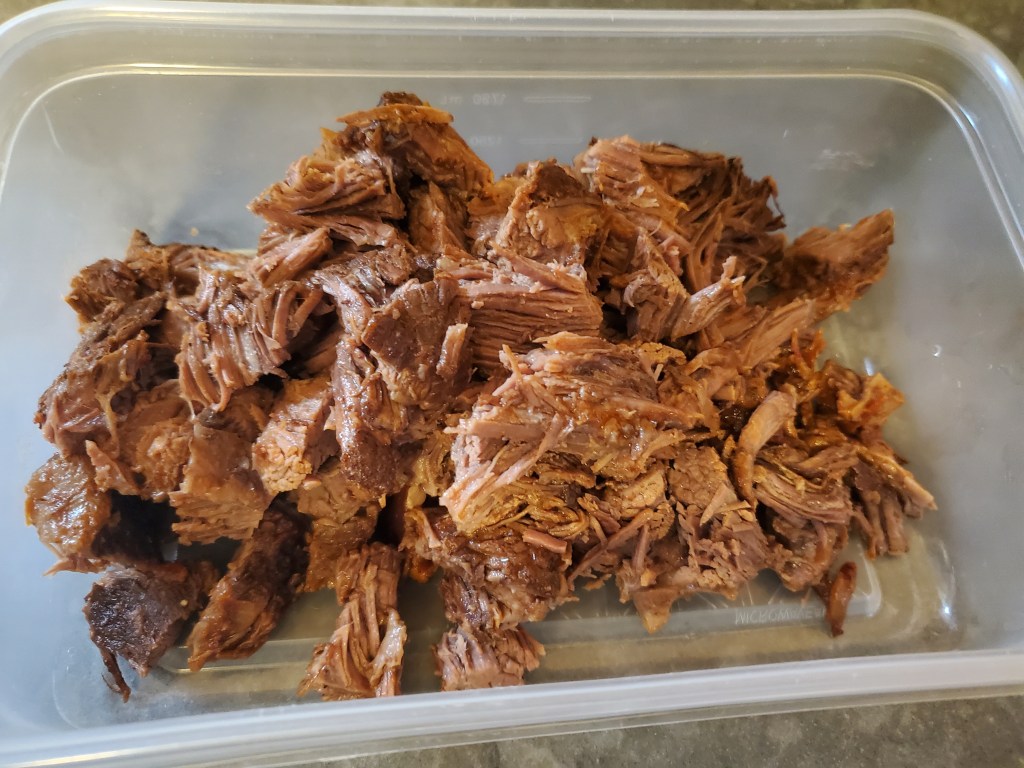
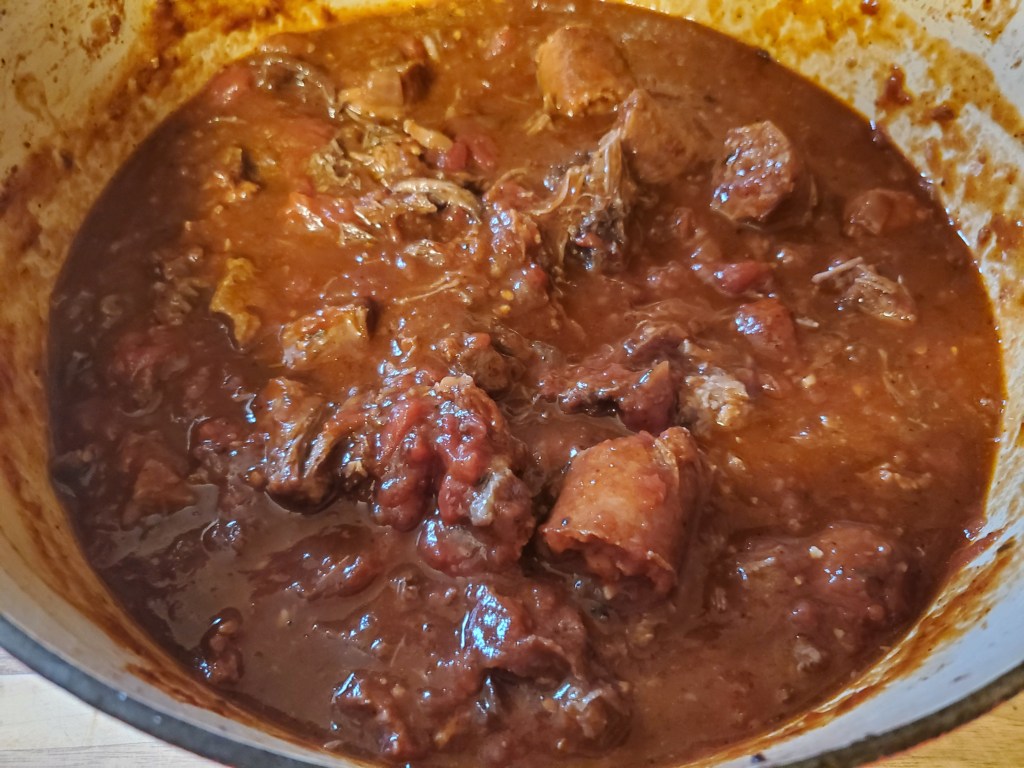
Technically, the gravy is ready to serve with pasta at this point. But as I’m sure many of you know, there are certain dishes that pick up flavor when sitting in the refrigerator overnight – and Sunday gravy is one of those.
So I will usually spoon the gravy into a plastic container, seal it and stick it in the fridge for the next day. If I’ve made more gravy than I want to eat over the course of the next week, I’ll freeze some for later use. In the case of the batch I made last week, I froze a quart of gravy and put about twice that much in the refrigerator.
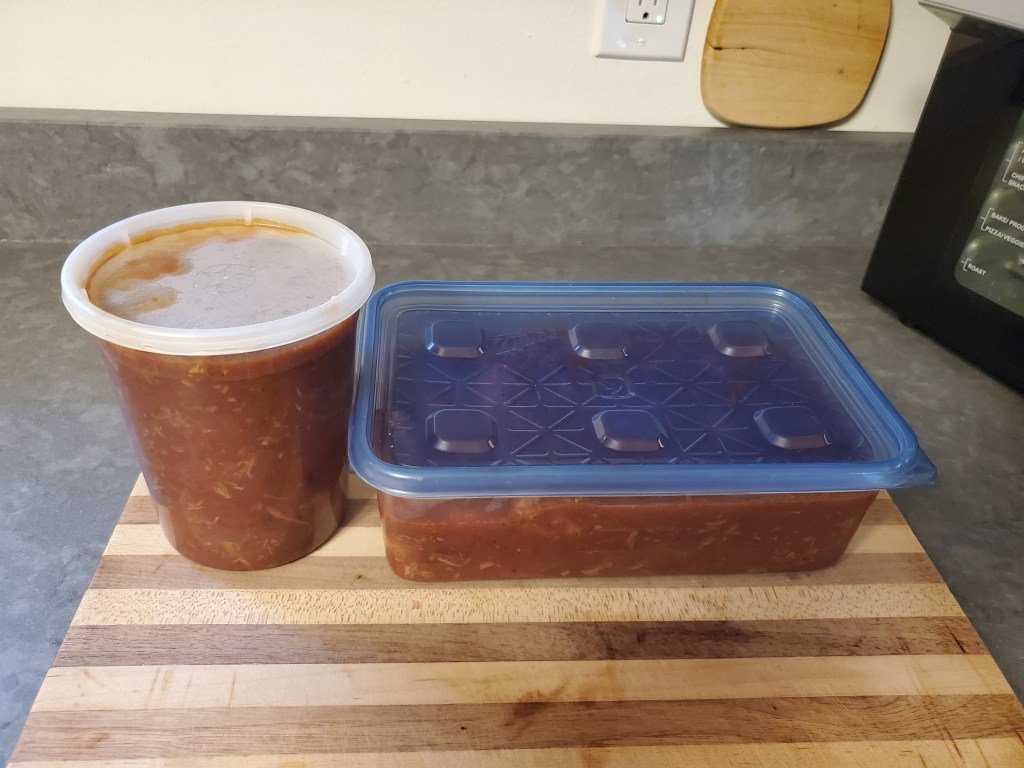
For dinner the next night – after scraping off the fat that rose to the top of the plastic container – I put about half of the refrigerated batch in a sauce pan with a little water to loosen it up a bit. If you put too much water in and think it’s too loose, you can add a bit of tomato paste to get to your desired consistency.
Bring the sauce to a light boil, then lower the flame to get it to a simmer.
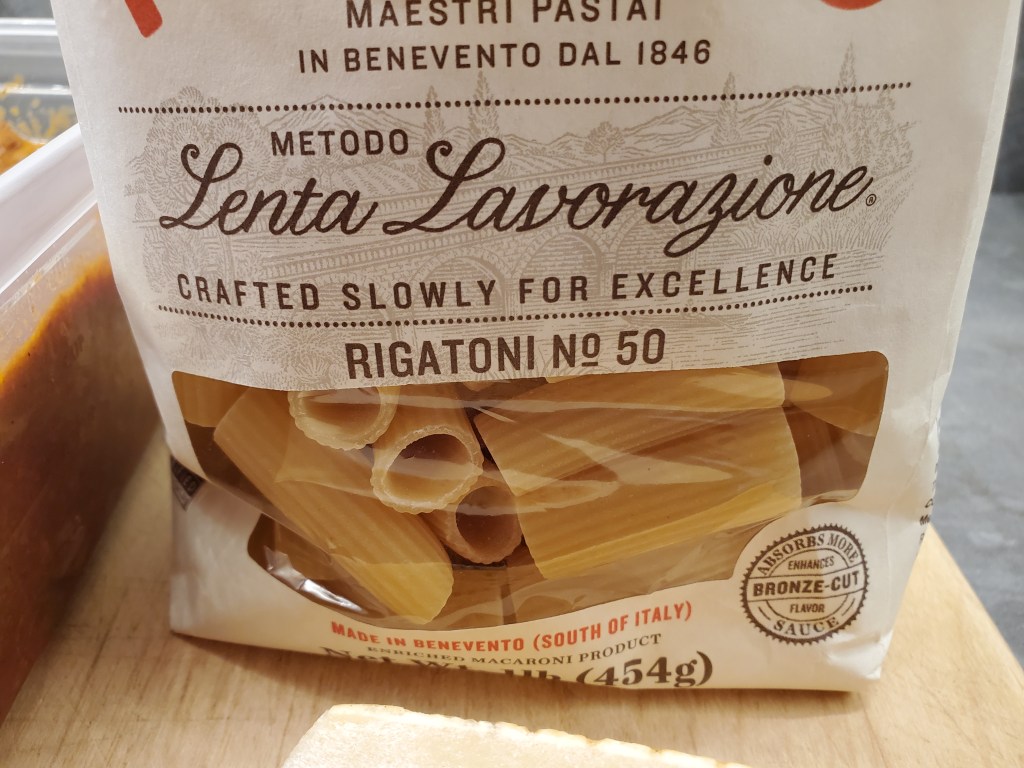
In a larger pot, boil enough water for the amount of pasta you’re using and cook it to al dente according to the package directions. But be sure to taste a piece of pasta to make sure it’s the right consistency before removing it from the heat and draining it. The rigatoni I boiled last week took a couple minutes longer than claimed on the bag to get to al dente.
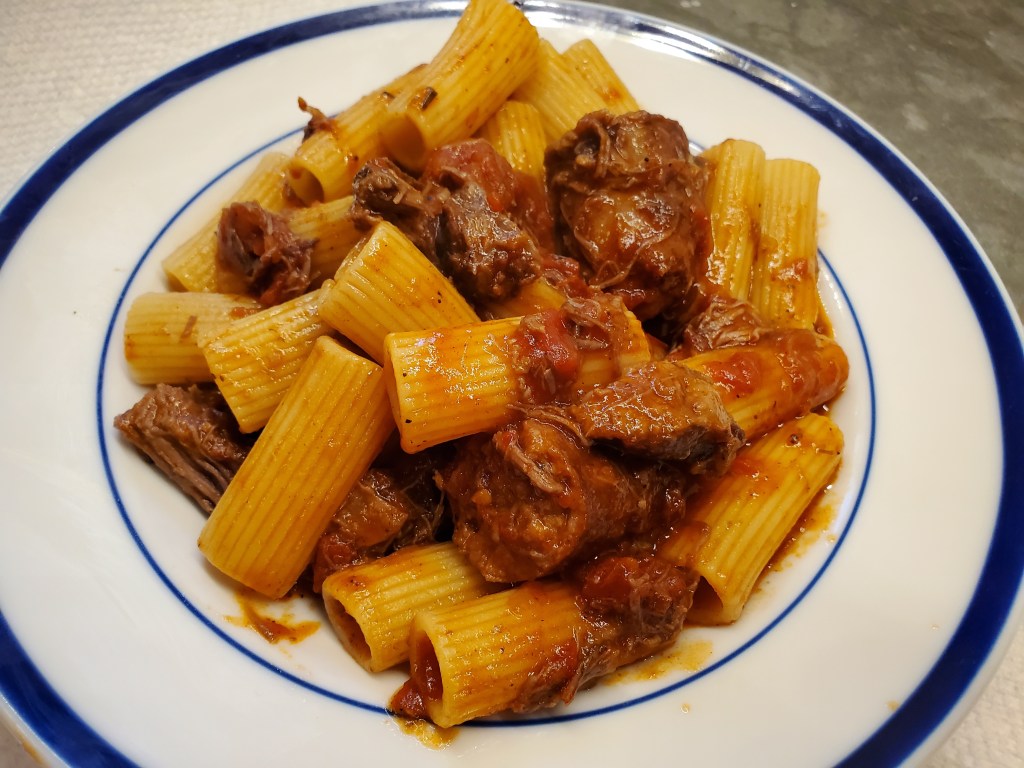
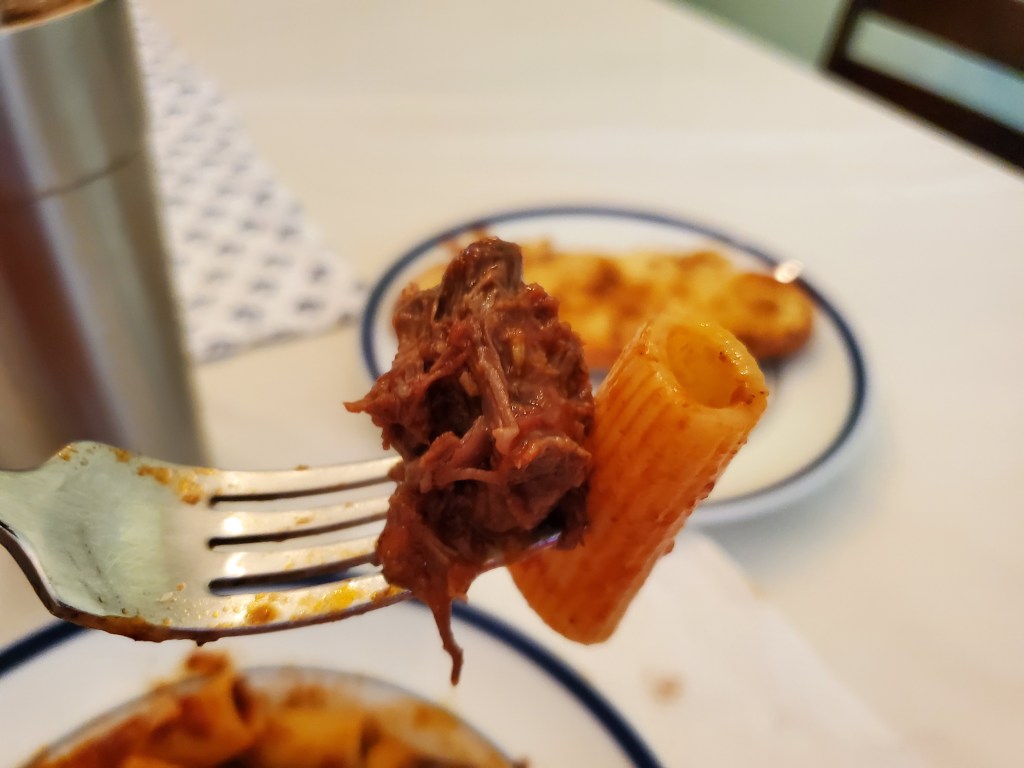
My preferred pasta for this recipe is rigatoni. But any pasta with ridges should work well. As with the canned tomatoes, I pay a little extra for imported pasta. De Cecco is an Italian brand found in most supermarkets that I generally prefer to the commonly seen domestic brands. Although as you can see in the photos below, I didn’t use it on this occasion.
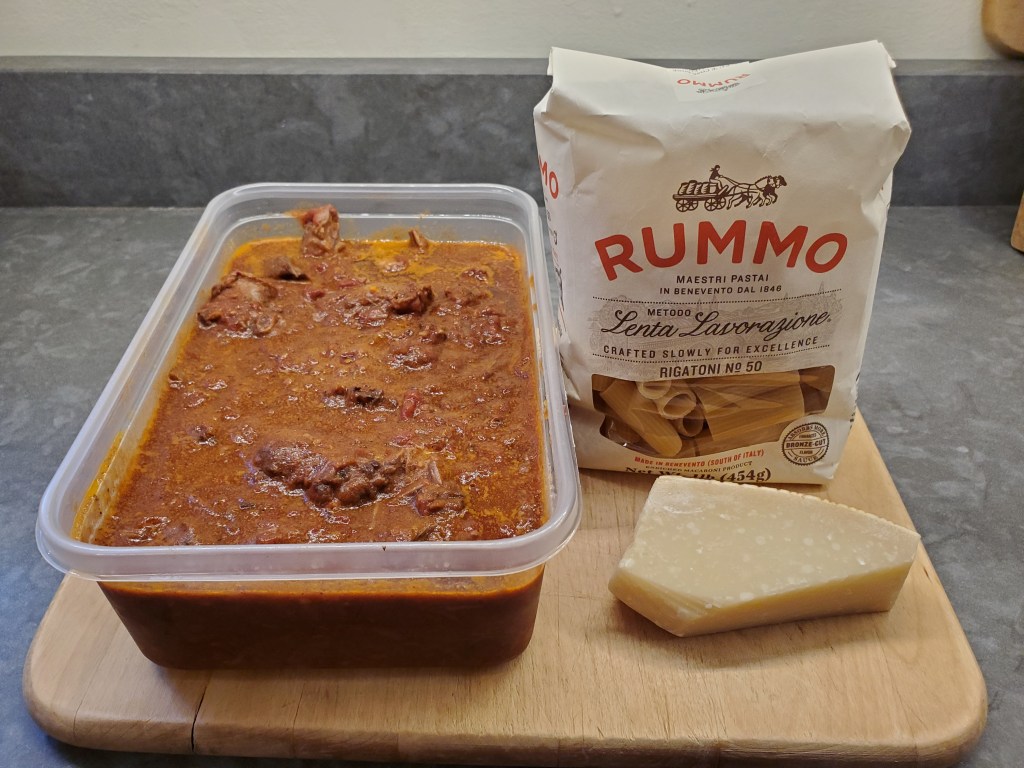
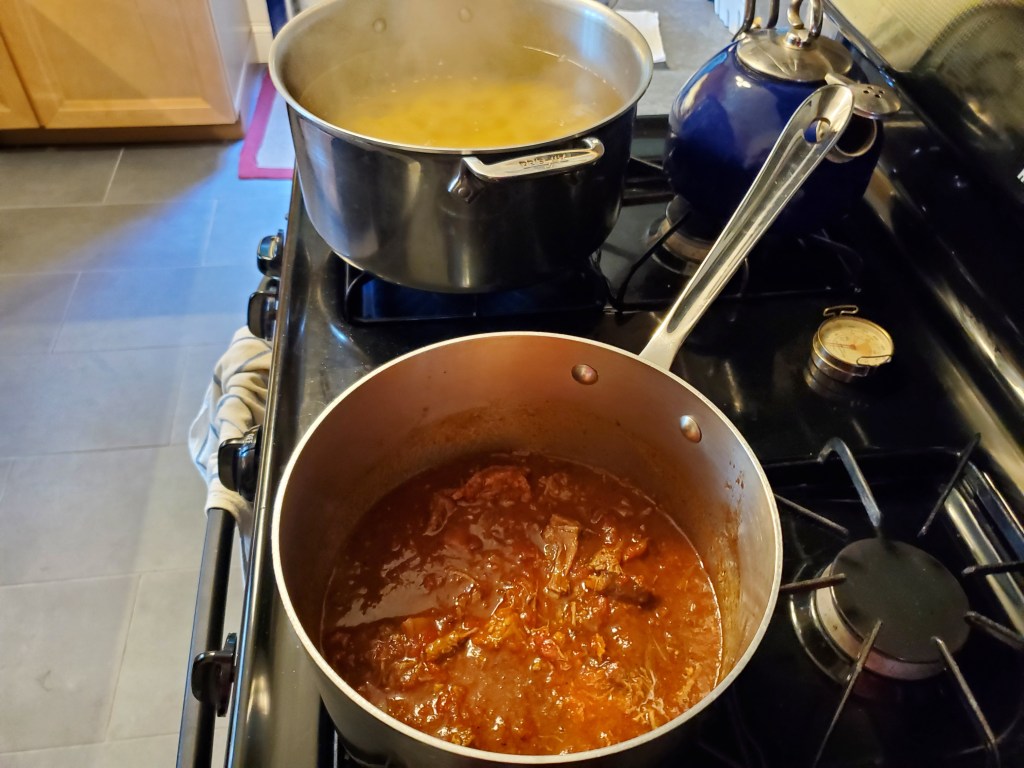
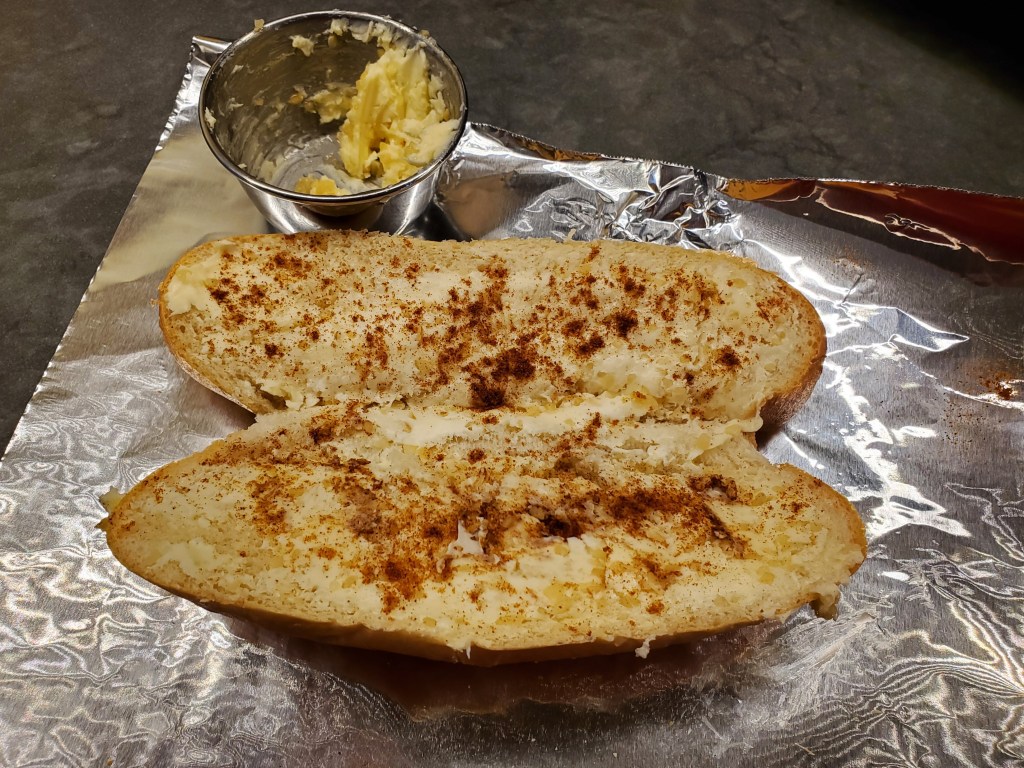
While the sauce and pasta were doing their thing on the stove, I prepared garlic bread. My wife and I had been out grocery shopping earlier that day and I picked up an Italian sandwich roll for that purpose.
After slicing the roll length-wise, I softened about three tablespoons of butter in the microwave and combined it with some pre-minced jarred garlic along with a bit of liquid from the jar before spreading it all over the inside of the roll. I then topped it off with a bit of paprika for color. My mother always did that when she made garlic bread during my younger years.
The bread then went into a 350 degree preheated oven. After a few minutes, I turned the heat up to broil and let it go for another minute, taking it out of the toaster-oven when the bread started to brown on top.

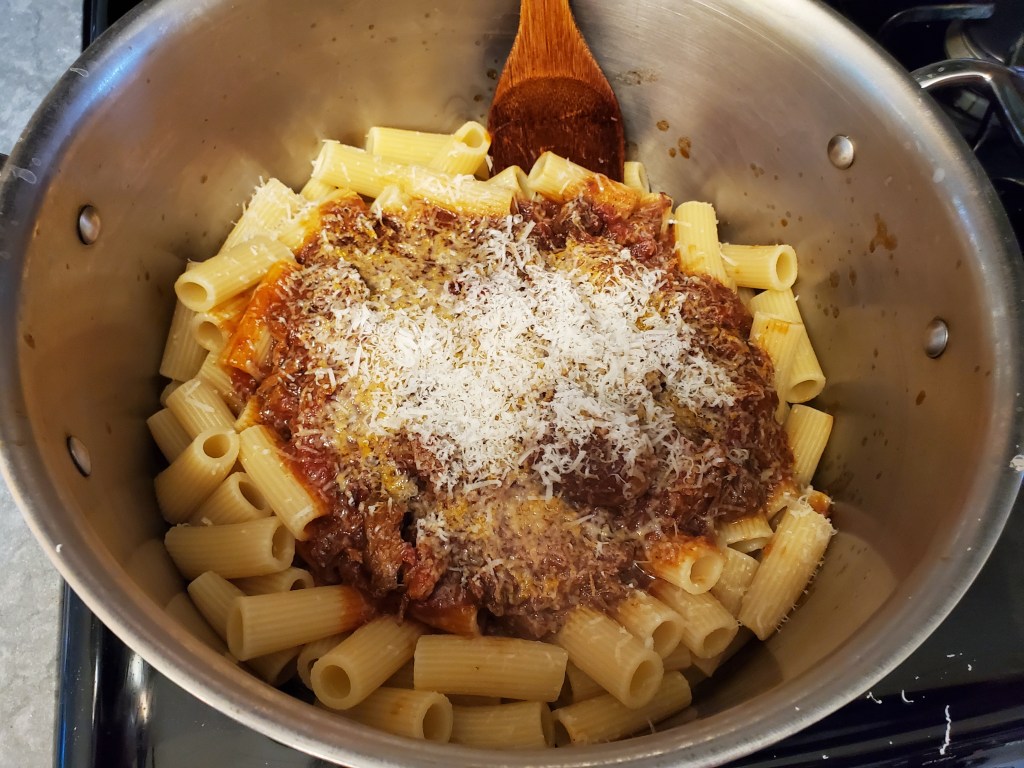
After draining the pasta, I put it back into the pot in which it was boiled and poured the simmering gravy over it before grating a healthy amount of freshly grated Parmigiano-Reggiano on top. The ingredients were then given a vigorous stir to get everything combined and gravy into as many pasta grooves as possible.
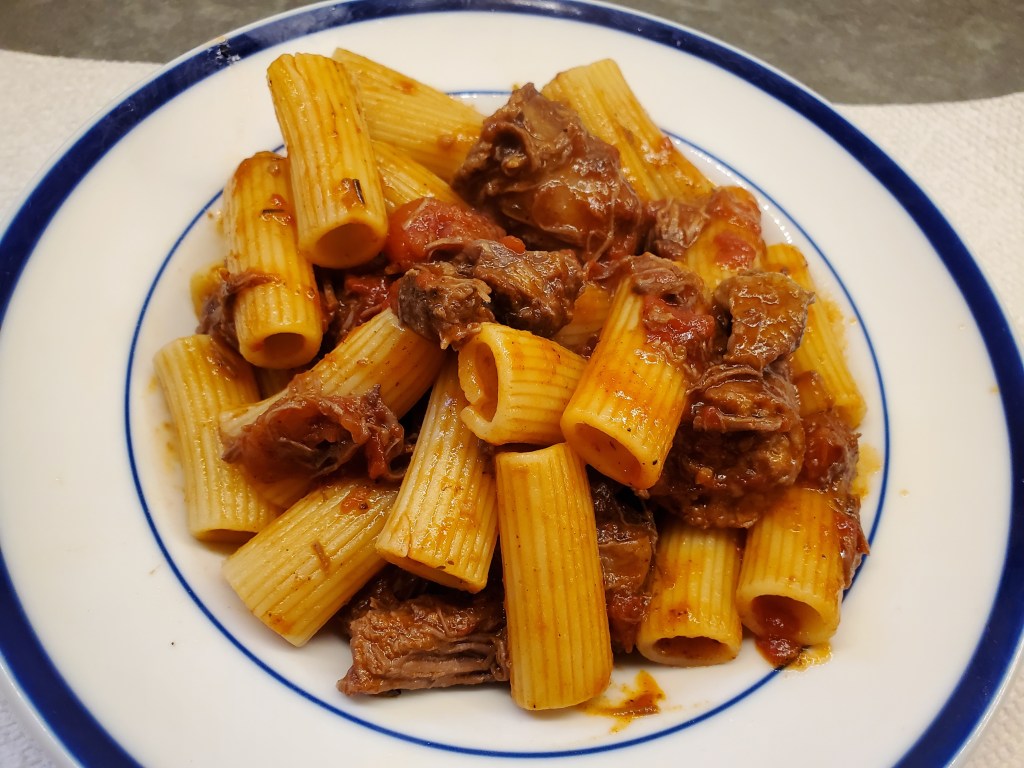
At that point, it was time to plate and serve.
At the risk of tooting my own horn more than I’m generally comfortable with, this may have been the single best thing I’ve ever cooked.
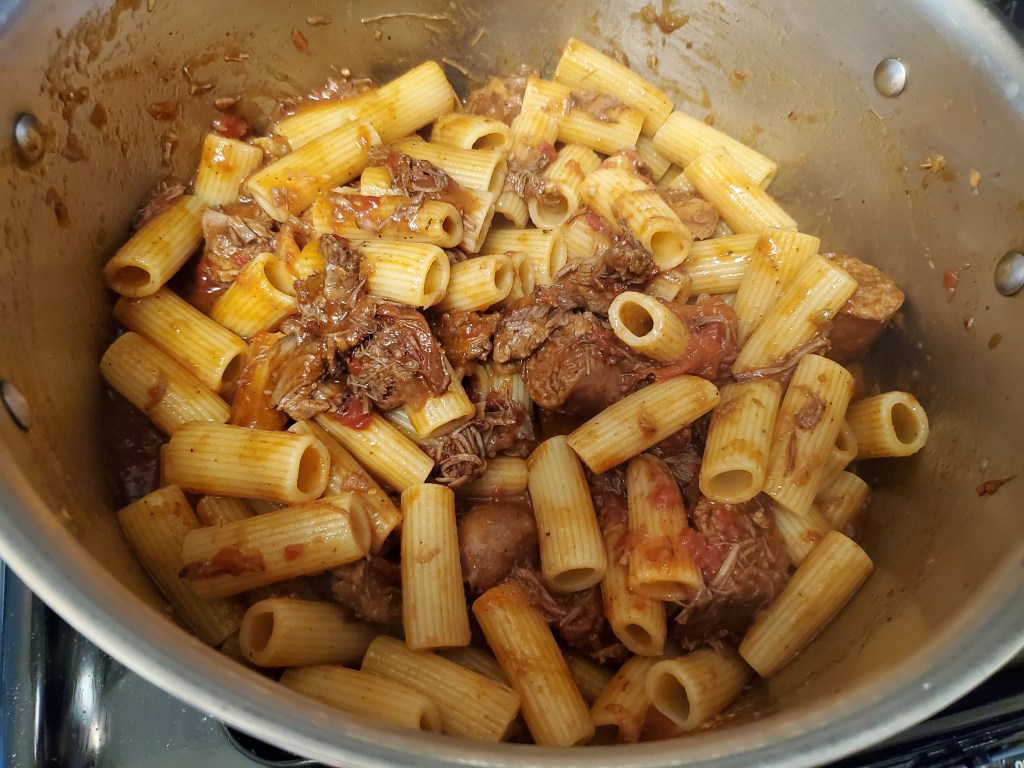
Note: The ingredient amounts in this recipe will result in a very chunky, meat-heavy finished product. If you would prefer a higher ratio of sauce, use an extra can of tomatoes and a little more water and red wine.
Rigatoni with Two-Day Short Rib and Sausage Gravy
Makes 12-14 servings
Ingredients:
3 Tablespoons light olive oil
3 long-bone short ribs
2 pounds hot Italian pork sausage
1 large sweet onion, chopped
5 cloves garlic, minced
3 tablespoons tomato paste
1 1/2 cups red wine
2 28-ounce imported cans of San Marzano tomatoes with D.O.P. on the label
Fresh Italian herbs, either tied into a bundle or placed in a cheesecloth pouch
Dry Italian herbs
3 tablespoons sugar
1/2 teaspoon salt
1 teaspoon black pepper
1/4 teaspoon hot red pepper flakes
1/3 cup grated Parmigiano-Reggiano cheese
1 3/4 pounds dry Rigatoni with ridges
Directions:
1. Pour the olive oil into a well heated pot that is big enough to hold all of the ingredients. After giving the oil a moment to heat, place the short ribs into the bottom of the pot and sear them on all sides. This should take several minutes per side. When finished, remove the ribs from the pot and set them aside, but leave the rendered fat and grease from the searing process in the pot and don’t turn the heat off. If fitting all three ribs onto the bottom surface of the pot is difficult, do this step in two batches.
2. Place the sausage links into the same hot pot that was used to sear the short ribs and gradually spin them so that they brown on all sides. When they are finished browning, remove the sausage links from the pot and set aside, but again, leave the heat on and any accumulated rendered fat and oil in the pot.
3. Place the chopped sweet onions into the hot oil and fat at the bottom of the pot and let them go over medium heat until they get soft, stirring occasionally. Then add the garlic, stir and let sit for another half minute. At that point, add the tomato paste and stir it into the chopped onions and garlic.
4. Pour the red wine into the pot and bring it to a vigorous boil. Allow it to continue boiling until reduced by half. While the wine is boiling, scrape off as many bits that were left on the bottom and sides of the pot when searing the meat as possible with a wooden spatula.
5. After the wine has reduced by half, pour the two cans of tomatoes with accompanying liquid into the pot with the onions and garlic. Rinse the excess tomato film off the sides of the cans and pour the water into the pot. Then add the fresh and dry herbs, salt, pepper, sugar, red pepper flakes and grated cheese to the pot and give everything a good stir.
6. Bring the sauce to a boil over medium heat, then lower heat until achieving a low simmer. At that point, add the short ribs and sausage links to the pot and do your best to arrange them so that they are covered by the sauce.
7. Allow the gravy to simmer 4-6 hours, stirring occasionally. About three hours in, start to break up the sausage links into smaller – 1”-2” – pieces with your wooden spatula. You can also remove any short rib bones that have detached from the meat at that point.
8. When you’ve finished simmering your gravy, remove the herb pouch or bundle and discard. Also, take out the short ribs and set them aside to cool off. Let the gravy sit while the ribs cool.
9. When the now boneless short ribs have cooled enough to handle them, cut off any large pieces of fat that didn’t fully render down in the pot and any portion of the membrane that remains attached to the meat and discard. Then cut the rib meat into small, bite size pieces or shred it. When you’ve finished doing that, place all of the cut or shredded pieces of short rib meat back into the gravy pot and give everything a good stir.
10. Place the gravy into a large plastic container and seal. You may wish to divide your gravy into a couple batches and freeze some of it in a separate container. Refrigerate the portion you plan on using overnight.
11. The following day or evening, skim off any fat that may have risen to the top of the gravy. Then heat as much gravy as you plan on using immediately in a sauce pan over a medium-low flame. Add a little water to loosen the gravy if it’s too thick or there isn’t enough sauce with the meat. When it starts to boil, lower the flame and let it simmer while you take care of the next step.
12. Boil the Rigatoni to al dente according to the instructions on the box.
13. When the pasta is at the desired consistency, drain and place it back in the pot in which it was cooked. Pour the heated gravy over it and top both off with freshly grated Parmigiano-Reggiano. Then stir everything well so that the pasta gets coated with the gravy. Serve.
Nutritional Data (based on 14 servings and not including garlic bread):
Calories: 620; Fat: 29 grams; Saturated Fat: 10 grams; Carbohydrates: 53 grams; Protein: 32 grams; Sodium: 615 milligrams; Cholesterol: 87 milligrams; Sugar: 9 grams; Dietary Fiber: 4 grams
 BZ Maestro Eats
Looks terrific, and keto-friendly too! And I’ll bet it’ll taste twice as good when you make it this winter!
LikeLiked by 1 person
Thanks. I’d like to do one with just short ribs some time.
LikeLike